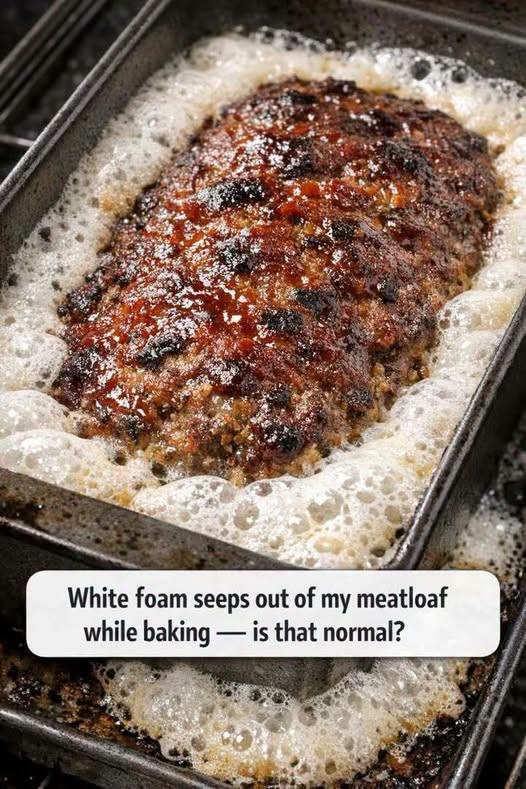
Baking a homemade meatloaf is one of the most comforting and rewarding kitchen activities you can undertake. It fills your entire home with a wonderful, savory aroma and promises a hearty, delicious meal at the end. However, as you peek through the oven window to check on your progress, you might notice something unexpected and a bit unappealing: a bright white, bubbly, foamy substance seeping out of the meat and gathering on top or around the sides.
Before you assume something went wrong and consider throwing your hard work away, take a deep breath. This exact situation happens to home cooks everywhere every single day. It is a completely standard, natural part of cooking ground meat.
In this detailed guide, we will break down exactly what this mysterious white substance is, the simple science behind why it shows up, and the best ways to manage, minimize, or prevent it so your final dish looks just as amazing as it tastes.
1. What Exactly Is the White Foam on Your Meatloaf?
The white layer or foam that forms on your meatloaf during the baking process is mostly a combination of liquid proteins and melted fats. Ground meat contains a high amount of moisture, naturally occurring proteins, and fat pockets.
When you mix these elements together to form a loaf, those components are all sitting right next to each other. As the heat of the oven penetrates the center of the food, these fluids are forced outward. When they reach the hot surface of the meatloaf, they mix with the air and the ambient heat of the oven, turning into a frothy, white, or light-grey residue. Because ground meat has been chopped and processed, these internal proteins are much more exposed to the surface than they would be in a solid cut of meat like a steak or a roast.
2. The Simple Science: How Heat Changes Meat Proteins and Fats
To understand why this happens, it helps to look at a little bit of basic kitchen science. Meat is made up of muscle fibers that contain tightly coiled strands of protein.
- Protein Changes: When meat is exposed to heat, these protein strands undergo a change called denaturation. They begin to unwind, relax, and then clump back together in a process called coagulation. As they tighten up, they squeeze out the excess water and soluble proteins trapped inside the muscle cells. This protein-rich liquid travels to the cooler surface of the meatloaf.
- Fat and Moisture Mixing: At the exact same time, the solid fat within your meat blend begins to melt into a liquid. When this liquid fat meets the escaping water and protein, they mix together rapidly. The bubbling action of the heat creates a temporary blend, which shows up on your dinner as a thick, white foam. It is very similar to the frothy layer or “scum” that floats to the top of the pot when you simmer chicken bones or beef pieces to make a homemade soup or broth.
3. Is the White Foam Safe to Eat?
For Complete Cooking STEPS Please Head On Over To Next Page Or Open button (>)