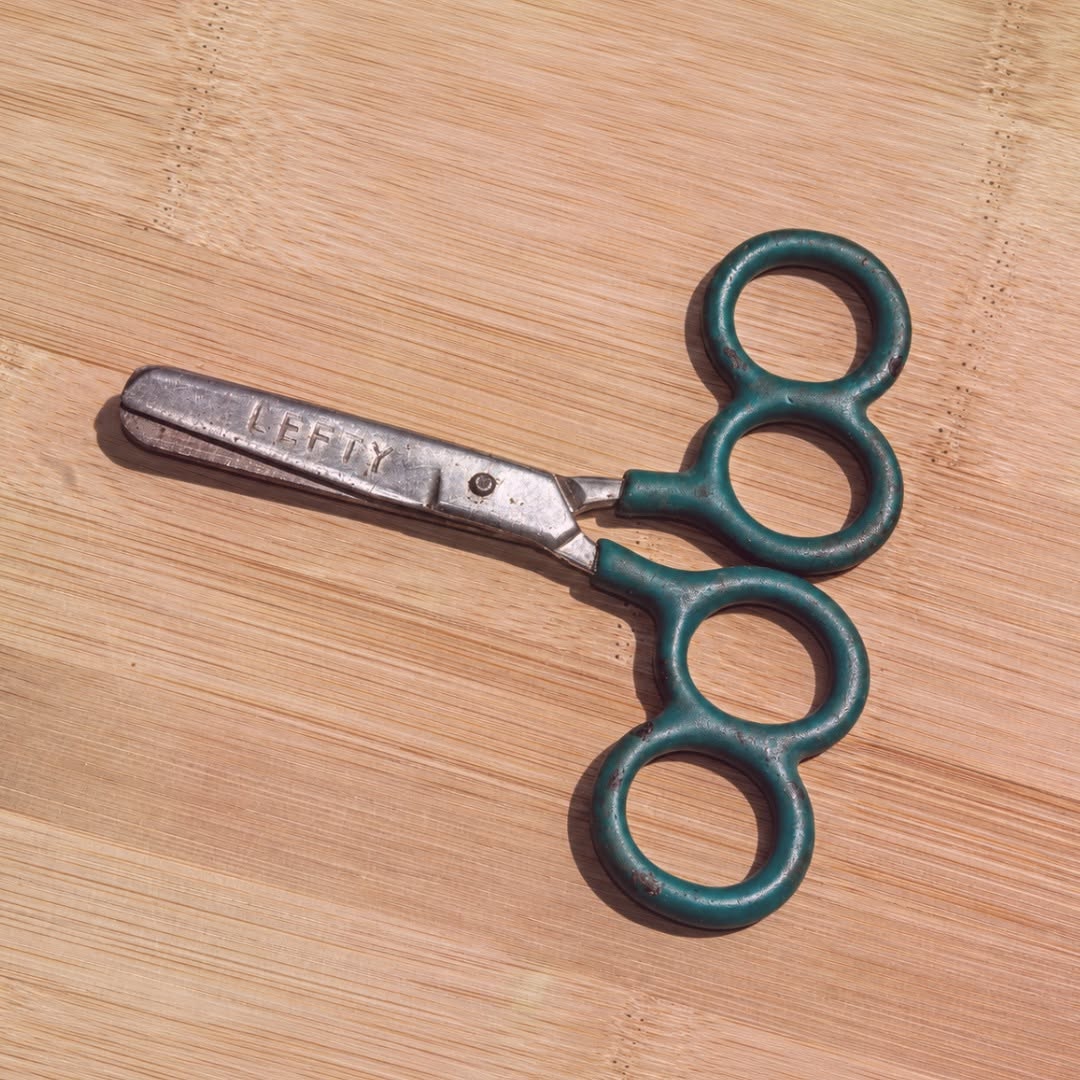
Later designs expanded the concept by adding alternative grips, safety features and training mechanisms. Patents from the early 2000s onward describe adaptive scissors with extra finger openings intended to help children or people with limited motor control guide the blades more effectively.
For that reason, it is safest to say that children’s scissors have existed since at least the mid-20th century, while modern dual-control and adaptive versions developed gradually afterward.
What Are They Used For?
These scissors may help children practice several important skills:
- Opening and closing the hand
- Coordinating both hands
- Following a cutting line
- Strengthening the fingers and hand muscles
- Learning proper scissor positioning
- Building confidence before using standard scissors
They may also be useful in occupational therapy for children who have delayed fine-motor development or difficulty controlling conventional scissors.
Some modern training-scissor designs specifically address the fact that young children may not yet have enough hand strength to reopen the blades independently.
A Simple Tool With a Thoughtful Purpose
What looks like an oddly shaped pair of scissors is actually a carefully designed learning aid. By allowing a grown-up to guide the movement while the child participates, dual-control scissors provide a gradual bridge between fully assisted cutting and independent scissor use.
The extra handles let an adult help—but the child remains actively involved in learning the skill.
For Complete Cooking STEPS Please Head On Over To Next Page Or Open button (>)